


In 2025, more people than ever are trying to make money on YouTube, and for good reason. Stories of creators earning thousands from faceless channels have flooded TikTok, Instagram, and YouTube itself. The rise of AI tools like ChatGPT, text-to-speech software, and stock footage sites made it seem easy: upload five videos a day, stay anonymous, and build passive income.
But that approach is no longer safe.
On July 15, 2025, YouTube introduced a major policy overhaul targeting low-effort, AI-generated content. This “inauthentic content” rule demonetizes videos that are mass-produced, repetitive, or lack original insight, especially those relying on AI narration without human context.
Creators using recycled scripts, robotic voices, or batch uploads now risk losing monetization, strikes, or even removal from the YouTube Partner Program.
If you’re starting out or following popular AI “blueprint” tutorials, this guide will help you understand the new rules, how YouTube enforces them, and how to create ethical, monetizable content that stays compliant using smart AI tools like Knolli.
Table of Contents
What Changed in July 2025
Key shifts:
- Mass-produced or near-duplicate YouTube videos are actively demonetized.
- AI-generated content must include original value such as commentary, storytelling, or educational insights.
- Creators must disclose realistic synthetic content using YouTube’s new AI disclosure toggle during upload.
Who Is at Risk of Losing YouTube Monetization Under the 2025 AI Policy?
If you’re uploading content that relies heavily on:
- Text-to-speech narrations
- Stock visuals without context
- Batch-uploaded listicles or reaction-free recaps
You’re at high risk of demonetization. Even YouTube Short channels are being flagged.
What Counts as “Inauthentic Content” on Youtube
The following infographic highlights formats YouTube is now actively flagging.
.png)
The channel StoriezTold was flagged for repetitive AI-narrated content about animals. Despite different video titles, all followed the same voiceover + slideshow format. This pattern triggered YouTube’s inauthentic content filter.
YouTube defines it as:
- Near-duplicate videos with minimal variation
- AI-generated voiceovers with no human input
- Slideshows with identical narration
Example:
A channel uploads 100 Top-10 videos using the same script template and AI voice: demonetized.
See More: 12 AI Content Creation Tools for YouTubers, Podcasters & Bloggers [2025]
Real Enforcement Actions: What Happens When You Cross the Line
YouTube’s July 2025 policy isn’t theoretical, enforcement is already happening. Here are high-profile cases that show how quickly creators can get demonetized or banned:
1. Channel Terminated: Fabricated AI True Crime
A YouTube channel called True Crime Case Files, with over 83,000 subscribers, was removed entirely after posting 150+ videos narrating AI-generated murder stories as fact. One video, falsely describing a crime in Colorado, led to public confusion and local media inquiries.
2. Network Banned: Deepfake Celebrity Disinfo
NBC News uncovered a coordinated network of channels spreading AI-generated fake news about Black celebrities, including Diddy, Denzel Washington, and Steve Harvey, using deepfake images and robotic narration. Several of these channels were demonetized or terminated.
3. Content Removed: AI-Simulated Dead Children
YouTube began striking or deleting channels that used deepfake voices of murdered children to narrate fictional crime stories.
The platform updated its harassment policies in January 2024 specifically to address this disturbing trend.
Youtube Risk Summary Table
| Content Type | Risk Level | Recent Action |
|---|---|---|
| AI true crime stories using real names/places | Extreme | Channel termination |
| Deepfake celebrity gossip/disinformation | High | Network-wide demonetization |
| AI-simulated deceased children | Extreme | Content removal + strikes |
| Mass-produced AI listicles or B-roll + TTS | Medium | Demonetization warnings |
YouTube’s AI Disclosure Requirements
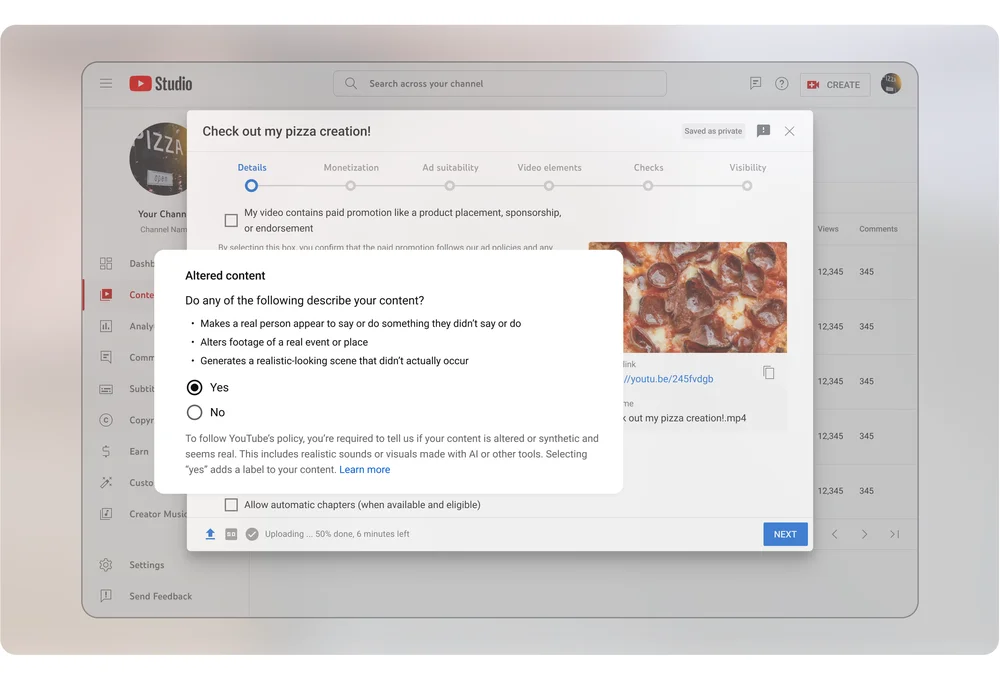
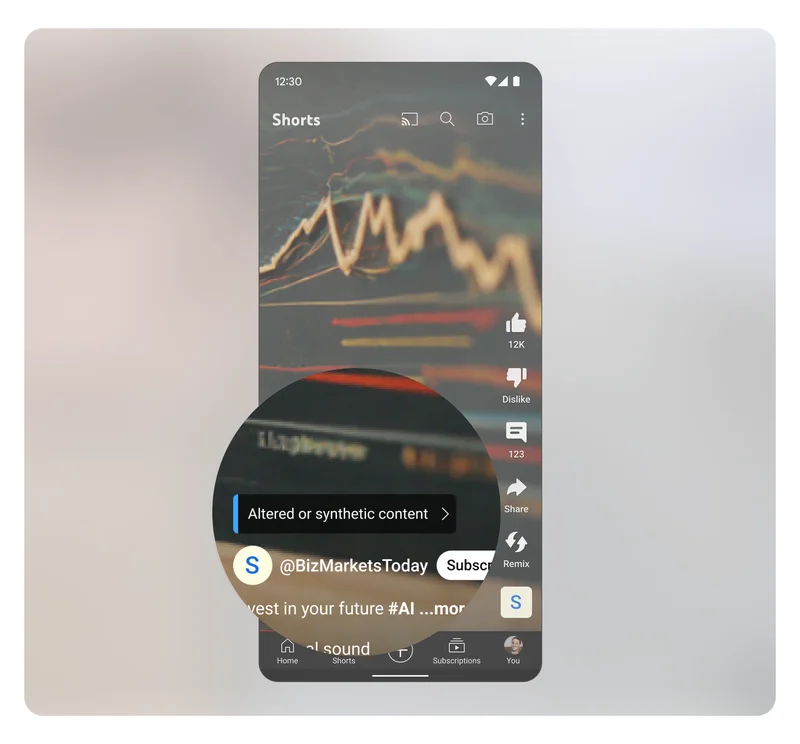
Every upload now asks:
“Does this video contain realistic, altered, or synthetic content?”
Source: YouTube Blog
Source: YouTube Blog
Failing to toggle “Yes” when required can lead to:
- Content removal
- Channel strikes
- Suspension from the YouTube Partner Program (YPP)
Disclosure is mandatory if you use:
- AI voiceovers mimicking humans
- Deepfakes or AI avatars
- Edited news or political content
How YouTube Flags Inauthentic AI Content
YouTube uses:
- Machine learning: Detects duplicated footage, robotic cadence, and repeated templates.
- Manual reviewers: Investigate channels that get flagged.
- Strike system: Non-disclosure or repeat offenses lead to channel penalties.
See More: AI in Content Creation: Challenges & How to Overcome Them
The Compliance Playbook for Youtube Creators
Safe Scenarios (You’re Good If…)
1. You Add Commentary or Analysis to AI-generated scripts
Example: Youtuber Matt Par utilizes AI tools for scriptwriting but adds personal insights and commentary to enhance the content’s value and engagement.
Why It Works: By infusing personal analysis and commentary, creators ensure their content offers unique perspectives, aligning with YouTube’s emphasis on original value and expertise.
2. You Show Face or Voice in YouTube Videos
Example: Steven Bartlett, known for “The Diary of a CEO,” employs AI to generate content but ensures his presence through voiceovers and personal storytelling, maintaining authenticity.
Why It Works: Displaying one’s face or voice humanizes the content, fostering a stronger connection with the audience and adhering to YouTube’s guidelines against faceless, AI-generated content.
3. You Cite Sources and Structure YouTube Videos Thoughtfully
Example: Bruno Sartori, a Brazilian comedian, creates satirical content using deepfake technology but ensures all content is well-researched, cited, and structured to provide context and clarity.
Why It Works: Proper citation and structured presentation not only enhance credibility but also comply with YouTube’s policies on transparency and originality.
How Knolli Helps You Monetize AI Content
Knolli helps creators avoid “AI slop” and stay monetized by:
- Turning your original content (PDFs, transcripts, docs) into AI copilots
- Embedding them on your site or YouTube description
- Offering subscription, pay-per-use, or chat access
| YouTube Requirement | How Creators Can Comply |
|---|---|
| Show original value and a unique perspective | Add personal commentary, storytelling, or analysis |
| Avoid repetitive or mass-produced content | Create varied videos; avoid copy-pasting templates |
| Include human presence or voice | Appear on camera or add your voiceover |
| Disclose AI use when applicable | Use YouTube’s disclosure toggle and mention AI usage openly |
| Diversify monetization methods | Use memberships, merchandise, sponsored content, alongside ads |
See More: Top AI Tools Every Content Creator Must Use in 2025
Quick Youtube Compliance Checklist
Safe vs High-Risk AI Scenarios Chart
| ✅ Safe Scenarios | ❌ High-Risk (Flagged) Scenarios |
|---|---|
| Personal narration + edited script | AI voiceover + stock images/slideshow without dialogue |
| On-camera commentary over AI B-roll | Bulk uploads of near-identical AI script videos |
| Sourced, story-driven content | Template-based AI listicles or repetitive readings |
✅ Use this to audit your content before uploading to YouTube:
- AI content includes human commentary or personal insights
- Proper AI disclosure toggle selected at upload
- Uses original visuals, voice, or storytelling
- No reused scripts or batch template content
- Revenue includes diversified streams (not only AdSense)
- Knolli copilot embedded in description or pinned comment
FAQs
Q1: Is all AI content banned on YouTube?
No. You can use AI tools if you add personal insight, voice, or visuals.
Q2: What if I forget to use the disclosure toggle?
You risk content removal or a strike. Always disclose when using realistic AI content.
Q3: Can I use Knolli with YouTube?
Yes. Embed your Knolli copilot in the video description or comment section.
Q4: Can Knolli host paid content?
Yes. You can gate AI copilots behind subscriptions, pay-per-chat, or one-time access.
YouTube AI monetization policy rules have just changed. Discover what’s allowed, what’s not, and how to keep your AI videos monetized.
Wed Aug 27 2025 05:48:02 GMT+0000 (Coordinated Universal Time)
szwenska-chriss
creators